

 Español






Share:


Session I: South Gas Pipeline Project Progress
-
Moderator – Anthony Laub, partner of Laub & Quijandría Consultants
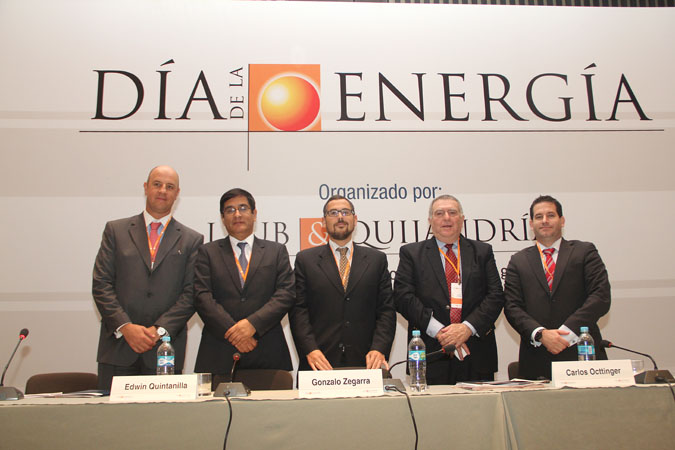
The main speaker was Edwin Quintanilla, , Vice-Minister of Energy (VME),who analyzed the following 4 paradigms of the development of the South Gas Pipeline (See Presentation):
- With regards to supply, he pointed out that there is certainty of the availability of the gas reserve volume for the project. As of 12-31-12, he confirmed that the volume of the natural gas reserves is 15.7 Tcf and resources have been re-evaluated at 80 Tcf.
- With regards to demand, the VME explained that the Energy Security Act establishes the need of building power generation capacity in the South (cold reserve) and that would be consolidated into an energy node in that zone and it would be the demand mainstay of the project.
- With regards to design,he explained there have been previous studies carried out by Proinversion, and they are being reviewed by consultants (Foster Wheler and Wood McKenzie). It is expected that Proinversion manages to have a better evaluation on the project setting, the corresponding investment and service cost; and with that, they can close the basis for the tender of the project.
- With regards to scope, the VME detailed the need of improving the energy security and of diversifying the matrix by promoting hydro/gas/diesel competition. Finally, he pointed out the following keys factors for the development of this project: the need of engaging all sectors, social license and coherent regulation of the current legal framework.
The panel of this session was made up by:
- Carlos Octtinger, President of the Raw Materials Commission of the Argentine Petrochemical Institute, analyzed the petrochemical industry perspective in the region (See Presentation)and stated that the large number of shale gas in USA will affect the petrochemical project competitiveness. Even though there is a good number of projects in the region, the petrochemical project of YPFB in Tarija (Bolivia) seems to be the only one being implemented. He pointed out that this project doesn’t mean a major risk to a future petrochemical project in Peru because the regional demand – adding to our market: Chile, Colombia and Mexico – justifies the ethylene and polyethylene plant construction. Additionally, he estimated that the ideal price of the ethane in the plant could range between 4-5 US$/MMBTU; therefore, it is important to evaluate all alternatives for the extraction and the mobilization of the ethane from the Camisea Zone to the South of the country. Finally, Dr. Octtinger insisted on the need of the analysis of the processing industry complexity, being necessary the promotion, the incentives, among others that could lead to the establishment of over 300 processing industries at medium term.
- Fernando Zagazeta, Vice-president of corporate finance at Credicorp, mentioned the importance of the risk identification for the financial evaluation, and pointed out that the South Gas Pipeline project will be more at risk if it is performed without the participation of natural gas liquids.
- Gonzalo Zegarra, executive director at Semana Económica (Economic Week), explained the citizens’ general perception of the project delay and gave his favorable opinion about energy exporting option based on the gas surplus in the Southern Cone, once the Hague’s ruling is known.
Download Presentations:
Temas Relacionados
